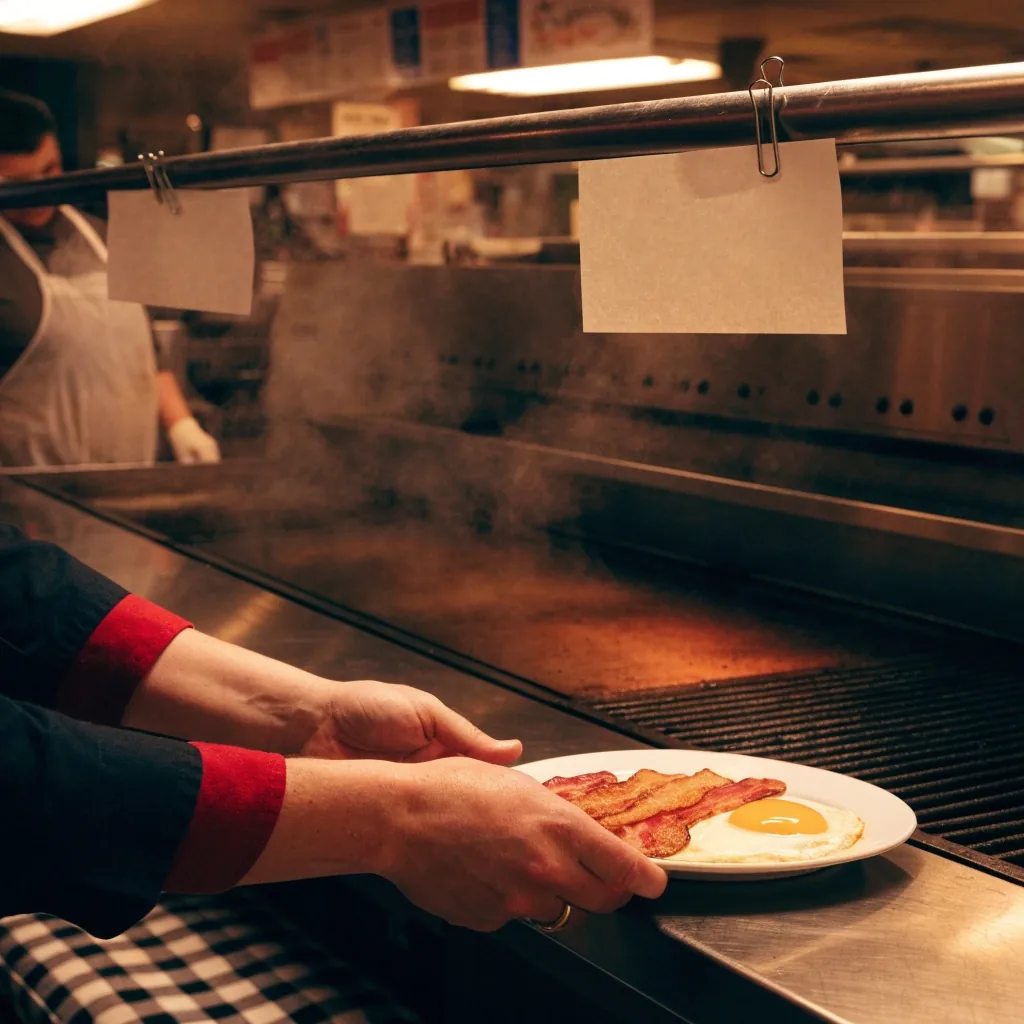
How the Waffle House menu fits together
Read it once and the counter stops being intimidating: which items are core, which are sides, which are plates, and how the combo format pulls them into one order.
How to read this page
The menu looks short until you start combining things
The structure is what makes it readable: a handful of core plates, a set of sides that finish them, and a combo format that fills slots rather than serving pre-built dishes. Once you can name the slots, the whole menu becomes one order instead of a wall of options.
We work from the materials the company publishes, including its nutrition and allergen documents and its live location menu pages. Where an item is branded or specified at ingredient level, we say so, and we keep prices out because they vary store to store and we do not publish them.
Two schedules in October 2026
Diner hours run around the clock, but the seating that actually matters is the one you get. Our contact desk answers menu questions Monday to Friday, 9:00 AM to 6:00 PM, at the contact page.
The combo plate is the organizing idea
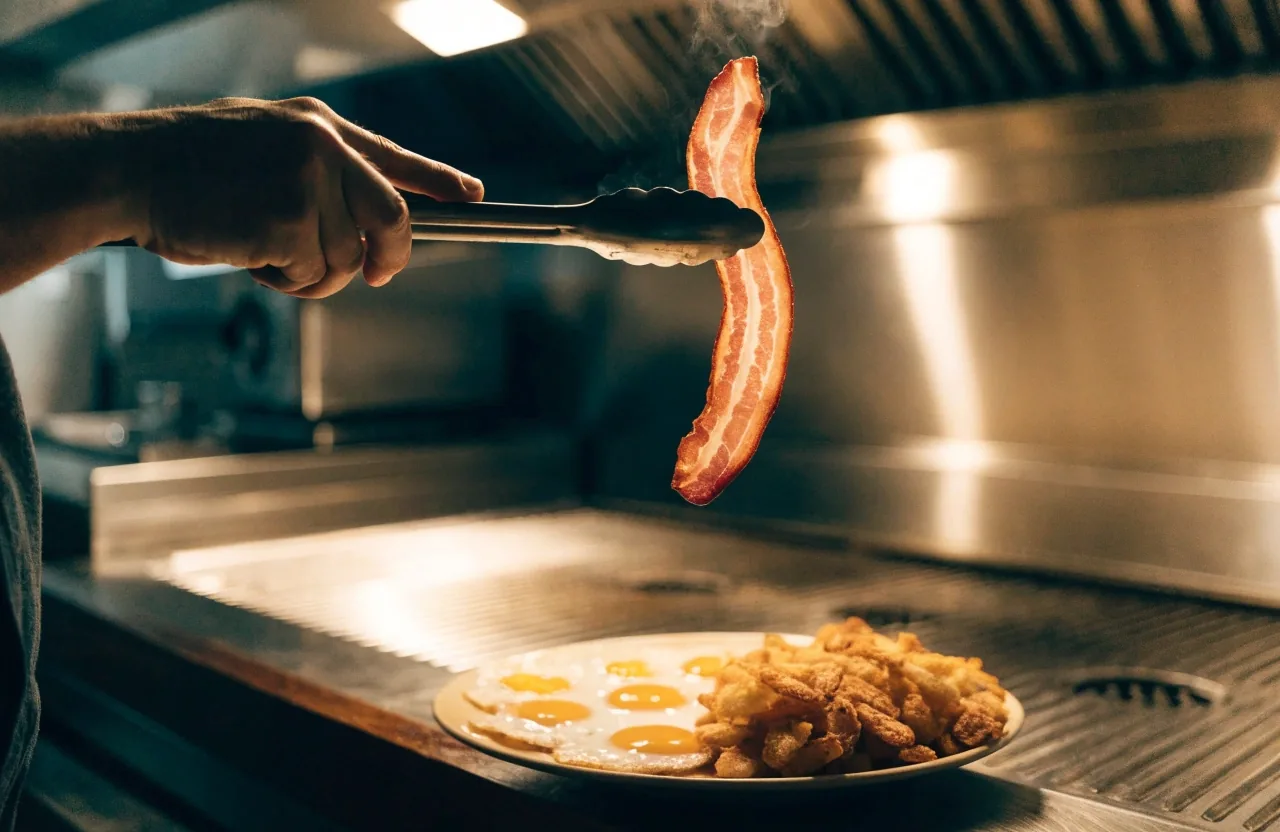
Most first orders are combos, and the combo is a template rather than a fixed dish. You pick eggs, you pick a breakfast meat, and you get toast, hashbrowns, and often a waffle depending on which combo you named. That structure explains why the menu feels small even though the combinations are not.
Once you understand the template, ordering gets faster. You are not choosing from a list of pre-built plates so much as filling slots, and the staff at the counter will walk you through it if you ask. Nobody at a busy griddle minds a direct question.
Eggs, a breakfast meat, toast, hashbrowns, and a waffle. The clearest introduction because it covers every slot at once.
Two scrambled eggs with cheese, listed in the chain's 2026 nutrition and allergen materials as a core item rather than a limited-time novelty.
Grilled chicken and eggs, a heavier protein-forward plate available at any hour alongside the classic combos.
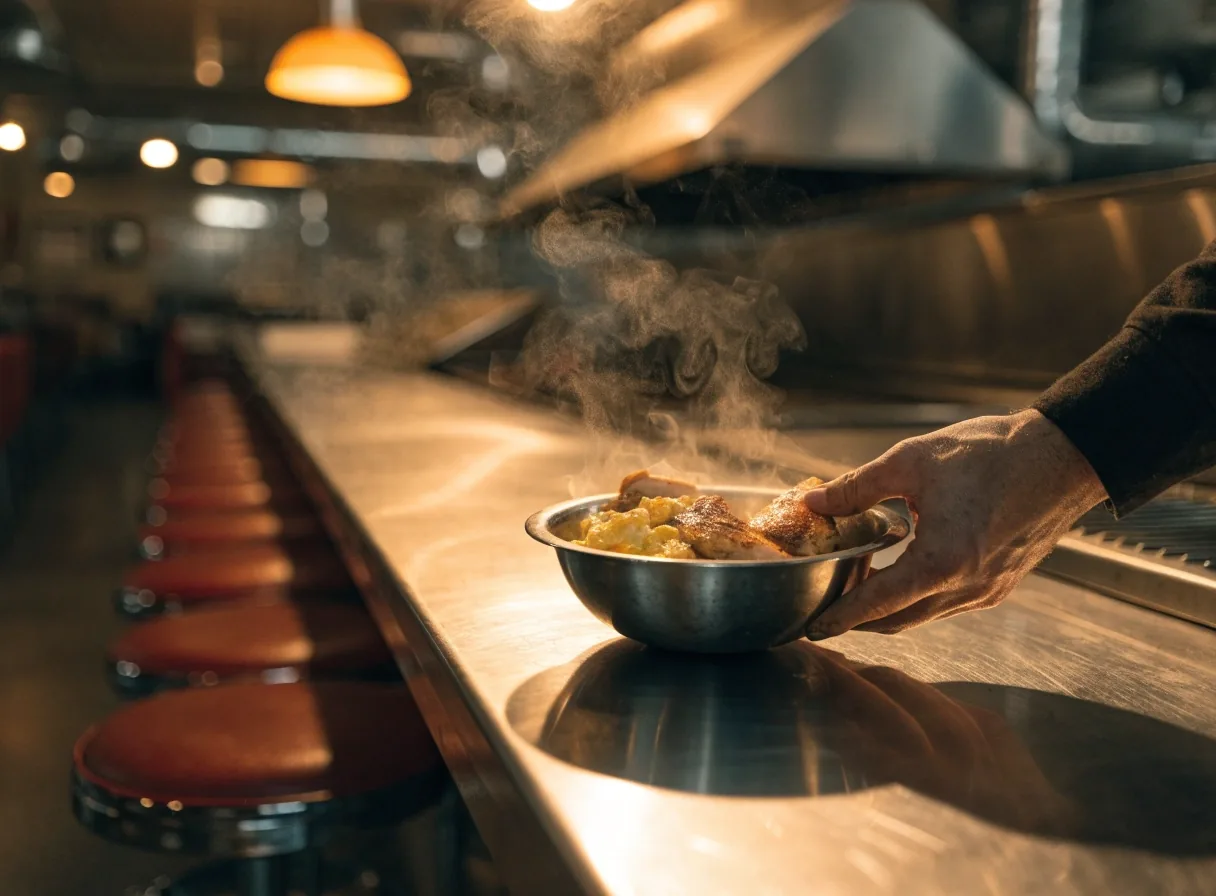
Grilled chicken and scrambled eggs in a bowl, the clearest departure from the griddle-and-plate format the rest of the menu follows.
Hashbrowns and the modifier system
Scattered, smothered, covered, chunked
Hashbrowns are the most customizable thing on the menu, and the customization is verbal. Scattered spreads them across the griddle. Smothered adds onions, covered adds cheese, chunked adds diced ham, and the words stack in the order you speak them. Learning the order lets you specify texture, not just toppings: ask for them scattered and well done if you want dark edges, and expect the cook to nod because it is a normal request.
Cheese 'N Eggs and the value of simple
Cheese 'N Eggs is two scrambled eggs with cheese, and it has stayed on the menu because it does one thing without decoration. It appears in the chain's 2026 nutrition and allergen materials as a core item rather than a limited-time novelty, which tells you something about how this menu is maintained.
That matters for anyone trying to understand the format. A diner that keeps a two-ingredient egg plate in permanent rotation is optimizing for repetition and speed, not novelty, and the rest of the menu follows the same logic. Simple items also travel well through a busy shift, which is why they survive.
Waffles, sweet and plain
The plain waffle is the baseline, and the blueberry waffle is the simplest extension of it. The company features the blueberry version on its own homepage, which places it in the sweet-breakfast core alongside the standard waffle rather than in a rotating seasonal slot.
Sweet waffle orders pair naturally with coffee and with a savory plate shared across the table. If you are ordering a full combo and a waffle separately, expect overlap, because most combos already include one. Ask before you double up.
The plain waffle and the blueberry waffle sit in the sweet-breakfast core. If a combo already includes a waffle, a second sweet order is a choice, not a necessity.
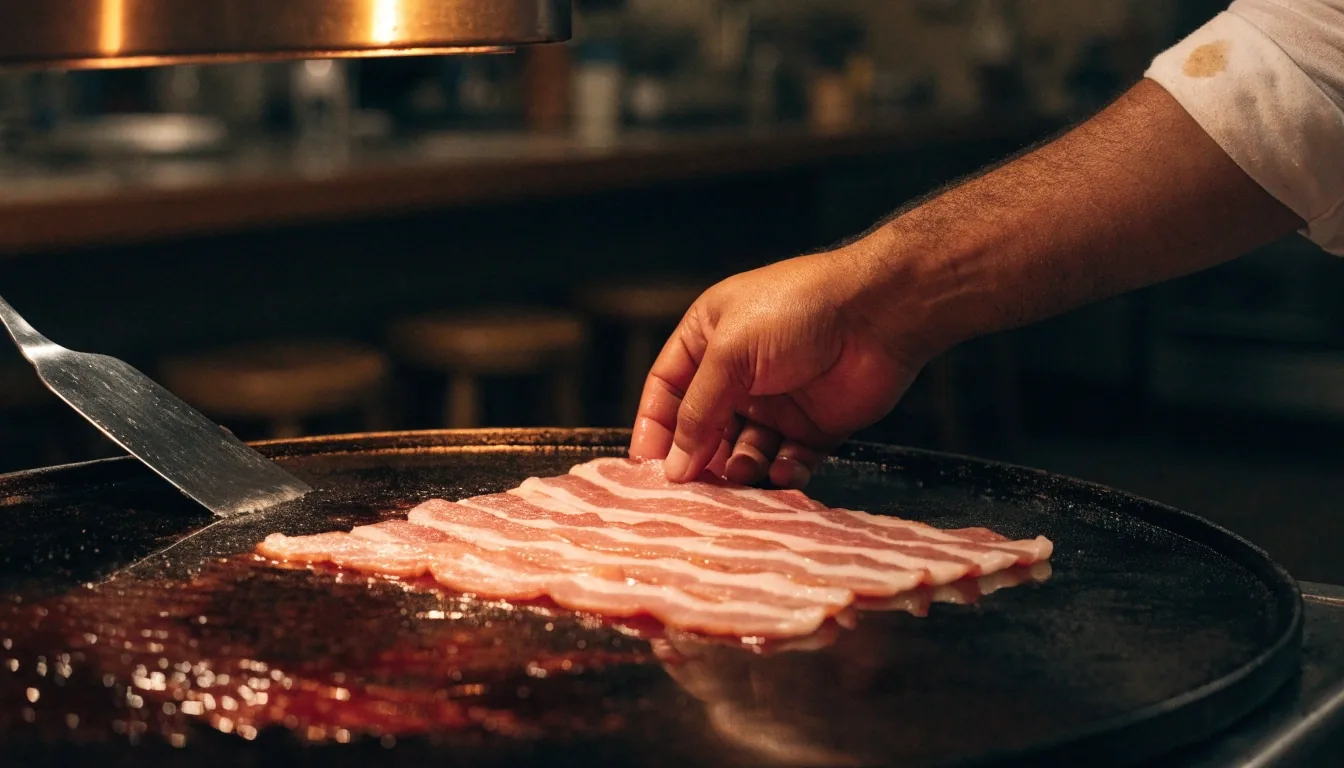
Breakfast meats and branded ingredients: Smithfield bacon appears by name on live location menu pages and functions as one of the meat choices in combo breakfasts. That kind of branded ingredient is part of why the plate tastes the same in different states, and it is worth knowing if you are comparing a store in one region to a store in another.
The meat slot in a combo is where the menu's standardization is most visible. You are choosing from a short list, and each option is spec'd rather than improvised.
Protein-forward plates and bowls
Two items show where the menu has moved. Meat Lover's Chicken & Eggs is built around grilled chicken and eggs and reads as a heavier, protein-forward breakfast available at any hour. The Fiesta Protein Bowl combines grilled chicken and scrambled eggs and is listed in the 2026 nutrition materials as a bowl-format option.
Both sit alongside the classic plates rather than replacing them, and both signal that the chain is responding to how some customers order now: more protein, fewer carbohydrate-heavy sides. The bowl in particular is the clearest departure from the griddle-and-plate format the rest of the menu follows.
What changed on the plate
More protein, fewer heavy sides
Order these when you want a breakfast that holds without a waffle and a pile of hashbrowns behind it. They do not replace the classic combos, and they are not a lighter version of them either.
- Grilled chicken anchors both plates in place of a breakfast meat.
- The bowl drops the toast-and-hashbrown pair entirely.
- Both are served at any hour, not only in the morning.
Toast, jelly, and the small sides
Toast and jelly show up on live menu pages as standard combo accompaniments, and they are the reason a plate feels finished rather than partial. Raisin toast is the version regulars ask for by name, and it changes the plate more than its size suggests.
Small sides are also where the menu stays in diner territory instead of drifting toward brunch. There is no garnish program here. The sides round out a plate, they do not decorate it, and that is consistent across regions.
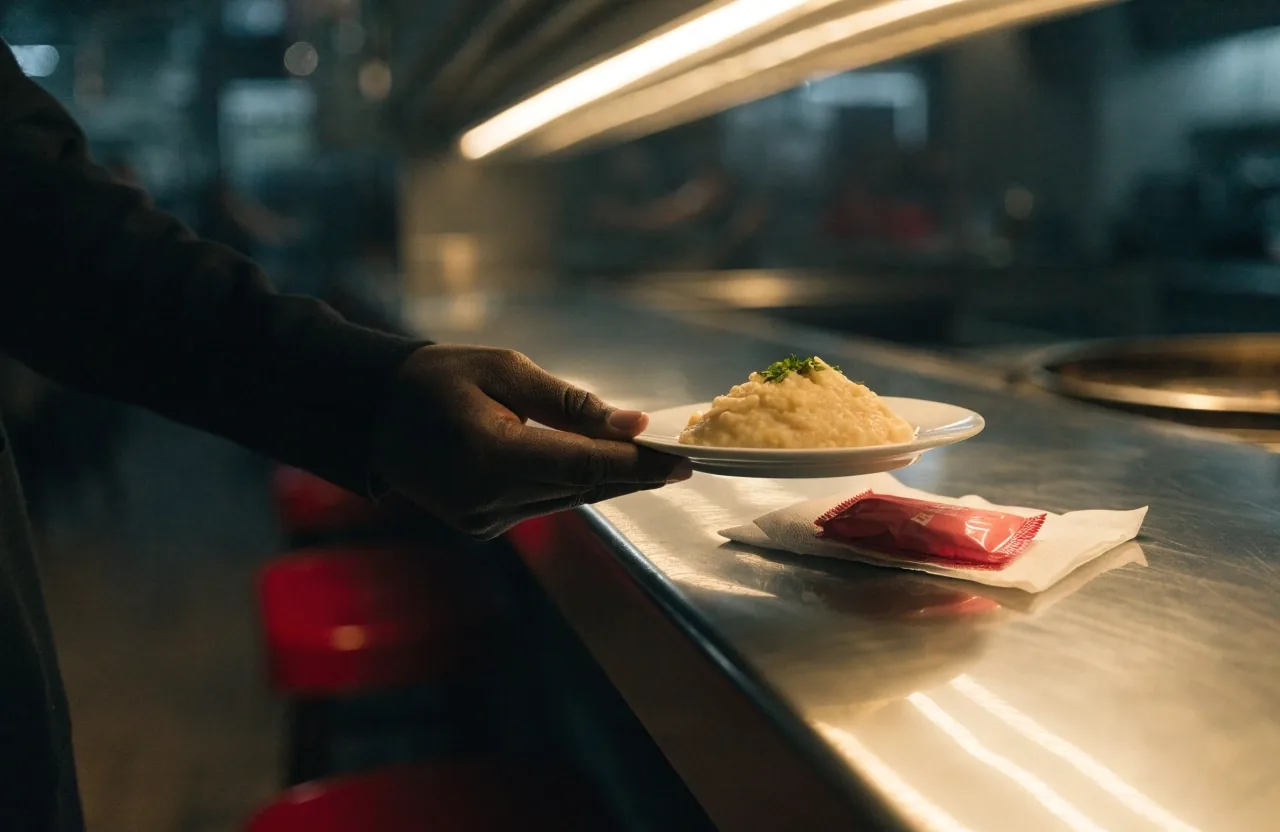
Ordering at a busy counter
Peak hours compress everything. If you know your combo slots before you sit down, you order in one pass, which is what the format is built for. If you do not, ask, and do it early rather than after the cook has started.
Two habits help. Decide whether you want the waffle or a separate sweet order before you speak, and name your hashbrown modifiers in one phrase instead of three. Both cut the back-and-forth, and both are what experienced diners actually do.
Heading to a specific store? Check store hours before you drive, at the contact page.
-
1
Name the combo first
The All-Star Special is the shortest way to say you want the full set of slots filled.
-
2
Pick the eggs and the meat
Both slots are yours. The meat list is short and each option is spec'd, so there is no wrong answer, only a preference.
-
3
Call the hashbrowns in one phrase
Scattered, smothered, covered, chunked: say them in the order you want them applied and add well done for darker edges.
-
4
Decide on the second sweet order
If a waffle is already in your combo, ordering a blueberry waffle on top is a deliberate choice rather than a needed one.
-
5
Add the small sides if you want the plate finished
Toast and jelly are the standard combo accompaniment. Raisin toast is the version regulars ask for by name.
Reading a menu page before you go
Location menu pages list what a specific store carries, and they are the practical reference if you are planning around one item. Nutrition and allergen documents are the better source for ingredients and for confirming that an item like Cheese 'N Eggs or the Fiesta Protein Bowl is still current.
Neither source lists prices reliably across every store, and we do not publish them. What we can tell you is what is on the menu and how it is built.
Where to keep reading
The menu is one part of the diner. The rest sits in how the rooms look and how stores differ by region.
Menu questions we hear most
What is the best thing to order at Waffle House?
That depends on what you want from the meal. The All-Star Special is the clearest introduction because it covers eggs, meat, toast, hashbrowns, and a waffle in one order. If you want something lighter, Cheese 'N Eggs is a two-ingredient plate that has stayed in permanent rotation.
What's included in an All-Star Special?
Eggs, a breakfast meat, toast, hashbrowns, and a waffle. It is a combo rather than a fixed recipe, so the meat and egg choices are yours.
How do Waffle House hashbrowns work?
You order them with modifiers. Scattered spreads them on the griddle, smothered adds onions, covered adds cheese, and chunked adds diced ham. The words stack in the order you say them.
Are there higher-protein options?
Yes. Meat Lover's Chicken & Eggs and the Fiesta Protein Bowl are both built around grilled chicken and eggs. The bowl is listed in the chain's 2026 nutrition materials.
Still have a question
Ask before you order
If a guide here leaves an ingredient or a current item unclear, write to us and we will point you to the published source we used. We keep menu questions on the same desk as everything else.
- info@mupfex.delivery
- Phone
- +1 206 381 1789
- Hours
- Monday–Friday, 9:00 AM – 6:00 PM
- Address
- 1831 8th Ave, Seattle, WA 98101, USA
We answer menu questions during working hours and reply in the order they arrive.