Menu guides
How items and combos are structured — what a combo adds to a base order, why a plate arrives with specific sides, and where the scatter, smother, and cover modifiers change the outcome of a hashbrown order.
The all-night counter
Orders & notes
+1 206 381 1789 info@mupfex.delivery1831 8th Ave, Seattle, WA 98101, USA
Monday–Friday, 9:00 AM – 6:00 PM
About the blog
Mupfex Delivery Blog is an independent editorial site about waffle house diner culture, menu structure, and the practical details of visiting a location. We are not affiliated with the chain, we do not operate restaurants, and we do not take orders or process payments.
Waffle House is one of the few American restaurant formats with a genuinely consistent menu across a very large number of locations, running a full breakfast service around the clock. That combination is unusual, and it produces a set of questions people ask repeatedly and answer inconsistently.
Most of those questions are practical. What is in a specific combo. What the hashbrown modifiers mean. Whether a particular store is open at 2am on a Tuesday. We started writing because the answers exist in published materials but are scattered, and because a lot of what circulates online is stale or speculative.
A waffle house counter at three in the morning is also just an interesting place to think about. The format has rules — the order call, the plate positions on the grill line, the way a shift changes hands — and those rules rarely show up in writing that isn't written by the company itself. We wanted somewhere to put the notes down in plain language.
So the first thing worth saying about this publication is what it is not. It is a reading site. Nobody here takes an order, and nobody here can hold a table for you.
Four page kinds, one subject
Menu guides, diner culture writing, regional notes, and breakfast staples. What follows is how each one gets made.
Four categories of pages, each with a different job. None of them are ranked, scored, or sorted by preference.
How items and combos are structured — what a combo adds to a base order, why a plate arrives with specific sides, and where the scatter, smother, and cover modifiers change the outcome of a hashbrown order.
Counter seating, service shifts, and the role the format plays as a late-night and road-trip stop. These pieces are about the room and the hours rather than a single plate.
How stores and regions differ, and how to check whether a specific location is open right now instead of trusting an old listing. If you only read one category before a trip, read this one.
The individual components, one at a time: eggs, grits, toast, and breakfast meats. Useful when you want to understand a single element rather than the whole plate.
We do not publish restaurant ratings, star scores, or rankings. We do not run a comments section where unverified claims accumulate. If we cannot point to something the company publishes, we do not present it as fact.
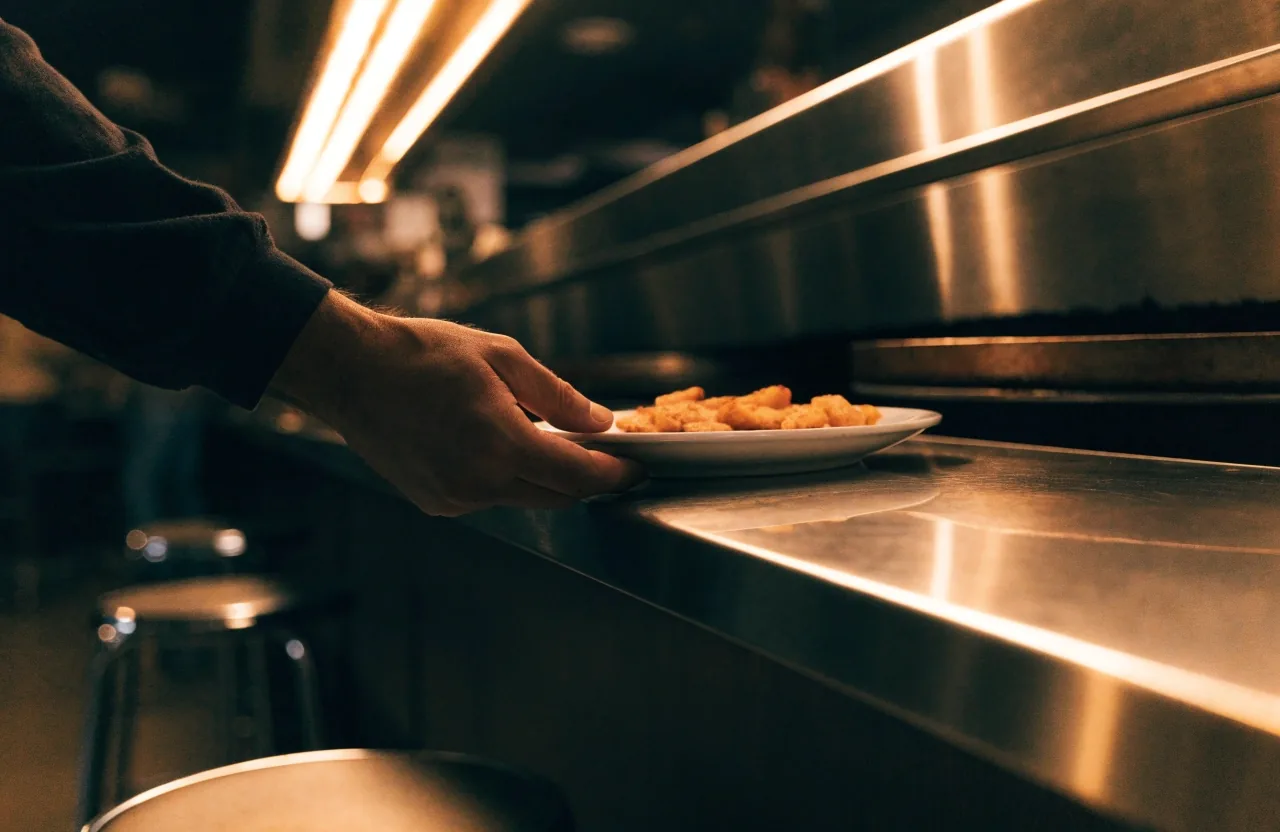
Two sources do most of the work: the company's own nutrition and allergen documents, and the individual store pages that carry address, phone, and daily hours.
Every descriptive claim on this site comes back to one of two published places. The nutrition and allergen documents name items like Cheese 'N Eggs and the Fiesta Protein Bowl and describe what they contain. The store pages list address, phone number, and daily hours, and those pages are updated dynamically, which is why we tell readers to check them on the day of a visit rather than rely on a saved screenshot.
Some of what sits on the menu is branded. When Smithfield bacon appears on a live location menu page, that is the basis for describing how much of the breakfast lineup leans on branded meats — not a guess about supply arrangements or a brand partnership we were told about privately. We only say what a current page says.
The same test applies to featured items. When the blueberry waffle is shown on the company's own homepage, that tells us it belongs to the sweet-breakfast core rather than a limited seasonal slot. Featured placement is weak evidence about sales and strong evidence about what the company considers standard.
Where a source is thin, we say so. Some items have a full ingredient breakdown and no published prep description. In those cases a guide explains the composition and stops there instead of inventing kitchen detail to fill the space.
Anything outside that list is opinion, and opinion gets labeled as such or left out.
We do not sell food, take reservations, or act as an ordering or delivery service. The name says blog because it is a blog. If you want to place an order or ask a store a question, the store is the place to do it.
We do not publish prices across stores, because they are not consistently listed and we are not going to guess. A price printed in one town can be wrong fifty miles away, and a confident-looking wrong number is worse than none.
We do not publish customer reviews or quotes attributed to diners. If a claim reads like social proof, it is not on this site. That is a deliberate editorial rule, not an oversight, and it applies even when a quote would make a page read better.
We describe what published documents say an item contains. We do not tell you whether it fits your diet, and we do not compare plates on health grounds. Allergen questions belong with the company's own documentation and the store you plan to visit.
Story selection follows reader questions. When the same question arrives three times, it usually means the published materials answer it and the answer is not easy to find, which is exactly the kind of page worth writing. Below is what happens between a question arriving and a page shipping.
We keep the wording readers use. "Is the one near the interstate open all night" and "what are the hours" are the same question to a search engine and different questions to a person.
If a company document answers it cleanly, we may not need a page at all. If the material is scattered across an item name, a combo listing, and a store page, that is the page.
We prefer explanatory pieces over opinion. A page about what scattered, smothered, and covered actually change about a hashbrown order is more useful than a page arguing about which plate is best, and it holds up longer as the menu shifts around it.
Menu guides and store-dependent notes get re-read against the current source. If nothing changed, the page goes back up as-is. If something did, it gets rewritten in place.
Menus change. Nutrition documents get revised, and store-level details shift with them. When a reader tells us something is out of date, we check it against the published source and correct the page rather than adding a note at the bottom that leaves the wrong sentence standing.
Corrections go to info@mupfex.delivery, or by phone at +12063811789. Including the specific page and what you found that contradicts it makes the fix faster.
We do not publish reader-submitted claims as fact, even when they are specific. If a correction checks out against a published source, we update the page and credit the change in our editorial log rather than quoting the sender.
The contact page has the form for questions, corrections, and story tips. We read everything that comes in and reply to messages that need a response, usually within a couple of working days.